

The advertised monthly price for POS software in Nigeria, often starting from ₦5,000, is just the beginning of the total cost for a business in Sierra Leone. The real expense emerges from scaling factors like adding stores, users, and products, which can force you onto pricier plans. At Carrotsuite, we offer transparent, predictable pricing for our Carrotsuite Retail POS to ensure costs scale logically with your growth.
The Monthly Price Is Just the Starting Point
The advertised monthly price for Point-of-Sale (POS) software in Nigeria—often starting from a free plan or a few thousand Naira—is merely the tip of the iceberg for a business owner in Sierra Leone. For retailers, supermarkets, and pharmacies in Freetown, Bo, or Kenema evaluating Nigerian technology vendors, the real expense materialises not on day one, but as your business grows. The true Total Cost of Ownership (TCO) is a function of scaling: adding stores, hiring more cashiers, expanding your product catalogue, and requiring more sophisticated analytics. The initial subscription fee is a marketing lure; the substantive costs are buried in the terms and conditions that govern your expansion. As a prudent business owner, your task is to look beyond that attractive entry price and map out how these scaling factors will impact your budget over one, three, and five years.
Most Nigerian POS systems are priced in tiers, a common Software-as-a-Service (SaaS) strategy designed to capture customers at different growth stages. An entry-level plan, perhaps advertised at an alluring ₦5,000 per month, might seem incredibly affordable when converted to Leones. However, this affordability is maintained by imposing strict limitations. For instance, it might be capped at one user, one store location, and a catalogue of 1,000 Stock-Keeping Units (SKUs). The moment you need to open a second branch, add a manager and two more cashiers, or your inventory diversifies past that 1,000-product threshold, you are compelled to upgrade. This isn't just a small step up; it's often a leap to a much higher, more expensive plan where the price can triple or quadruple overnight.
This is the critical juncture where a business's growth is penalised. A plan that was ₦5,000 can jump to ₦15,000 or even ₦30,000 per month simply because you added a single staff member or crossed an arbitrary product limit. At Carrotsuite, we address this pain point by structuring our Carrotsuite Retail pricing to be transparent and predictable. Instead of punishing growth with sudden, sharp price hikes, our model is designed to accommodate expansion without creating budgetary chaos. For Sierra Leonean businesses, this translates into the ability to plan investments with confidence, secure in the knowledge that adding a new location or more staff is a strategic decision, not one dictated by the punitive terms of your software provider. We provide a clear runway for growth, not a series of hidden financial hurdles.
Decoding Nigerian POS Pricing Models from Sierra Leone
When evaluating POS software from Nigeria, a Sierra Leonean business owner will typically encounter three primary pricing structures. Understanding the mechanics of each is crucial to forecasting your true long-term costs. The most common is the tiered subscription model, where features and capacity are bundled into distinct plans. For example, a provider might offer a 'Free' plan with basic sales tracking for one user, a 'Starter' plan around ₦5,000/month for multi-user access and basic inventory, and a 'Growth' plan at ₦15,000/month that unlocks advanced features like multi-store management and detailed analytics. The key is to scrutinise the limits of each tier—user seats, transaction volume, product count, and number of outlets. A tier's limits are the vendor's primary lever for forcing you into an expensive upgrade.
Another prevalent structure is the per-terminal or per-user model. This is especially common with global SaaS providers whose plans may be listed at $59 to $99 per checkout terminal per month. While this seems straightforward, it means the advertised price must be multiplied by the number of checkout counters you operate. For a supermarket with three tills, a $59/month plan immediately becomes a $177/month reality. Some Nigerian providers adopt a similar per-store model, charging a base price for the first location and a significant recurring fee for each additional branch. This transforms an affordable single-store solution into a costly multi-store liability, turning your expansion plans into a source of escalating software fees rather than increased profit.
Finally, you might encounter the one-off license fee model. Here, a vendor develops a custom system for a large upfront payment—sometimes running into thousands of dollars—as an alternative to a monthly subscription. While this model eliminates recurring payments, it carries significant hidden risks. These systems often lack the continuous updates, security patches, and responsive support that modern SaaS platforms provide. Your business could be left running on outdated technology with no path for improvement and costly developer fees for any required changes. For a dynamic Sierra Leonean business, the SaaS model offered by platforms like Carrotsuite provides superior flexibility, a lower initial financial barrier, and the assurance of an ever-improving platform—a critical advantage in a fast-evolving retail landscape.
Hidden Cost #1: Scaling Your Stores, Staff, and Product Catalogue
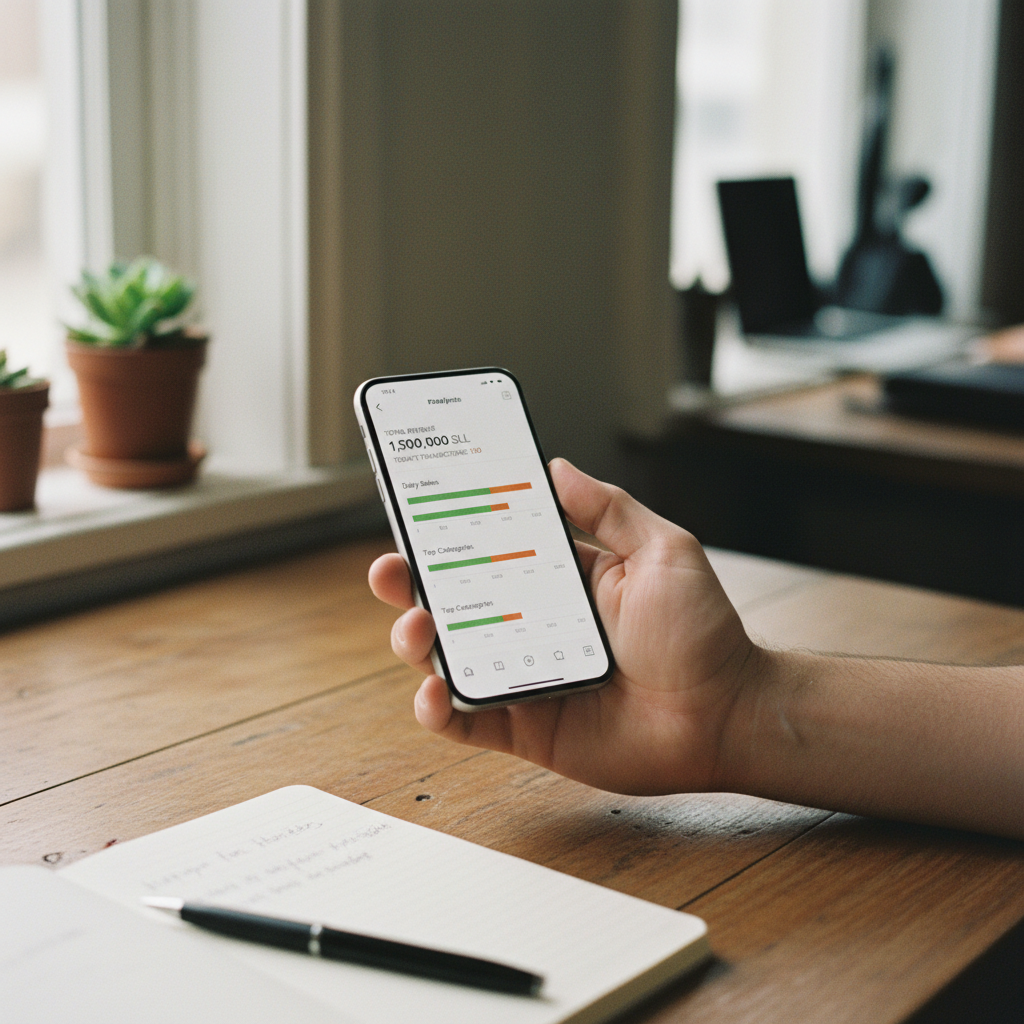
The most significant hidden cost in many POS systems is the direct penalty for business growth, which often manifests when you expand your physical footprint, team, or inventory. A system that works flawlessly and affordably for your single mini-mart in Freetown can become a financial burden when you launch new branches in Kenema and Makeni. Most POS providers architect their pricing tiers around the number of store locations. A plan costing ₦10,000 per month for one store doesn't simply double to ₦20,000 for two. Instead, adding a second location often triggers a mandatory upgrade to a premium 'Multi-Store' or 'Enterprise' plan, which could be priced at ₦50,000 or more. This represents a fivefold increase in your monthly bill for just one additional outlet, a cost increase that rarely aligns with the marginal profit from the new store.
Staff and product limits are equally pernicious traps. Entry-level plans are commonly restricted to a single user (the business owner) and a limited number of SKUs, for instance, 1,000 products. As your pharmacy's inventory expands to include more brands, dosages, and product variations, or as you hire supervisors, pharmacists, and cashiers who each require their own secure login, you will inevitably exceed these caps. For example, a Nigerian retail platform might offer a plan for an owner plus five cashiers. The moment you hire that sixth cashier to handle growing customer traffic, the system may lock you out or force an immediate upgrade to a much higher price bracket designed for large chains, even if your revenue hasn't grown proportionally. This creates a situation where you must delay hiring necessary staff to avoid a software cost spike.
This is a critical consideration for any ambitious Sierra Leonean business owner. Your operational software must be an enabler of growth, not a tax on it. Before committing to any POS system, demand a transparent breakdown of its scaling costs. Create a hypothetical growth scenario: ask the vendor, "What will my exact monthly cost be if I have three stores, 15 staff members, and 20,000 SKUs in two years?" A transparent provider like Carrotsuite will furnish a clear, predictable cost structure. This ensures that as you build your retail empire across Sierra Leone, your software costs scale logically and predictably with your success, not exponentially ahead of it.
Hidden Cost #2: Hardware, Payments, and Essential Integrations
The monthly software subscription fee is rarely the full picture; it's the cost of the 'brains' of the operation, but not the 'body'. To run a modern POS, you need a suite of compatible hardware: barcode scanners, thermal receipt printers, cash drawers, and a reliable computer or tablet to serve as the main terminal. While some flexible systems can run on existing devices like a standard laptop, many providers steer you towards their own proprietary hardware. For instance, a Nigerian POS vendor might sell a dedicated, all-in-one checkout device for as much as ₦390,000. For a pharmacy with two checkout points, this initial hardware investment can exceed $1,000, a sum that can dwarf the first year's software subscription cost. It is crucial to clarify if the software is hardware-agnostic or if you are being locked into a specific, and often expensive, hardware ecosystem.
Payment processing is another labyrinth of potential costs. Your POS system must be able to accept payments from a variety of sources relevant to the Sierra Leonean market, including local mobile money (like Orange Money and Afrimoney), bank transfers, and international cards. Some POS systems have built-in payment processing, but they invariably charge a percentage fee on every single transaction, typically between 1.5% and 2.5%. Others require integration with third-party payment gateways, which introduce their own setup fees and transaction charges. You must map out this entire payment ecosystem—from the POS to the gateway to your bank account—and calculate the cumulative per-transaction cost to avoid devastating surprises on your monthly financial statements.
Furthermore, essential business functions often depend on paid add-ons or integrations that are not included in the base POS plan. Do you require an integration with accounting software like QuickBooks? Do you want to send automated SMS alerts to customers upon purchase? Do you need a seamless connection to an e-commerce platform to manage online and offline inventory from one place? These are rarely included in an advertised 'Starter' plan. A system might be marketed at an appealingly low price, but once you add the modules for a customer loyalty program, advanced multi-store inventory reporting, and e-commerce sync, the total monthly cost can easily double or triple. At Carrotsuite, we prioritize an integrated approach, ensuring our platform works seamlessly with the tools you need without nickel-and-diming you for every essential connection.
A Practical Cost Calculation for a Sierra Leonean Supermarket
Let's translate these abstract costs into a concrete, real-world scenario for a small but growing supermarket business in Sierra Leone. Imagine you are launching with a single location in Freetown and have a solid business plan to open a second, smaller outlet in Bo within 12 months. Your Freetown store needs two checkout counters to manage foot traffic, while the Bo location will start with one. Your team will consist of a manager (who needs backend access) and four cashiers, for a total of five staff members requiring system access.
First, let's evaluate the software subscription. A seemingly affordable mid-tier Nigerian POS plan might cost ₦15,000/month. For your initial Freetown store with two tills, the vendor might confirm this plan is sufficient. However, the fine print reveals this plan is for a single location only. When you are ready to add your Bo branch, they will almost certainly compel you to upgrade to a 'multi-store' or 'enterprise' plan. This could inflate your monthly software cost to ₦40,000 or more—an increase of over 160%. This translates to an annual software expenditure of ₦480,000, which is over 5,000 New Leones (SLL) at current exchange rates, just for the software license.
Next, you must budget for the hardware. Each of your three checkout counters requires a basic setup: a USB barcode scanner (~$50 each), a thermal receipt printer (~$100 each), and an electronic cash drawer (~$60 each). This totals $210 per counter, or $630 for all three, before you even purchase the computers or tablets to run the software. If the provider insists on a proprietary terminal at, say, $500 per unit, your initial hardware outlay skyrockets to $1,500. Then, consider implementation. While many SaaS companies provide online documentation, on-site training for your staff in both Freetown and Bo could involve additional service fees for travel and time, potentially adding several hundred dollars to your setup cost. When you combine the scaled-up subscription, the necessary hardware, potential training fees, and account for currency exchange fluctuations when paying your Nigerian vendor, the 'affordable' POS system reveals itself as a significant, ongoing operational expense that requires careful financial planning.
The Sierra Leone Context: Connectivity, Power, and Support
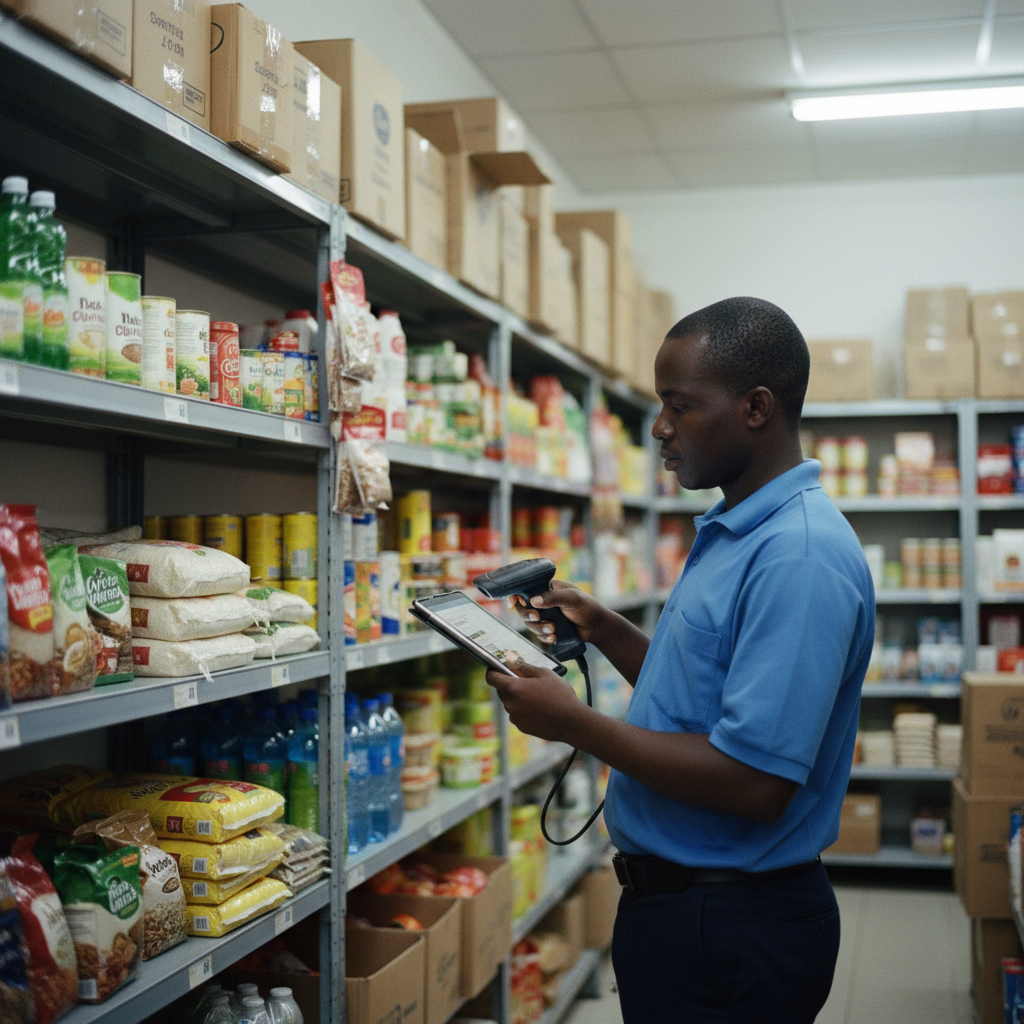
For any business operating in Sierra Leone, theoretical costs and software features are meaningless without vetting them against the practical realities of our local infrastructure. Unreliable internet connectivity and frequent power outages are not minor inconveniences; they are major operational hurdles that can bring a business to a standstill. A POS system that requires a constant, stable internet connection to perform basic functions—a so-called 'cloud-native' or 'web-only' system—is fundamentally unsuitable for most retailers outside of central Freetown. When evaluating a system from Nigeria or anywhere else, your first technical question must be about its offline capabilities. Can you still ring up sales, manage inventory, and print receipts when the internet is down? A truly robust offline mode is not a luxury feature; it is a non-negotiable requirement for business continuity in Sierra Leone. The system should be able to operate offline for extended periods—hours or even days—and then seamlessly sync all transactional data once connectivity is restored, without manual intervention or risk of data loss.
Power infrastructure presents a similar challenge. Essential POS hardware like printers, scanners, and terminals requires a consistent electricity supply. To mitigate the impact of frequent power cuts from the national grid, investing in a small Uninterruptible Power Supply (UPS) for each checkout counter becomes a necessary, non-optional cost. A UPS can keep your checkout operational during the brief but common outages, preventing lost sales and customer frustration. While the POS software itself, if running on a battery-powered tablet or laptop, can bridge these gaps, it's useless if its associated hardware goes dark. A system that freezes, crashes, or corrupts data when the power flickers is a liability that will cost you far more in lost revenue and stock-keeping chaos than you save on its subscription fee.
Finally, consider the practicalities of customer support. When your system fails during a peak sales period on a Saturday afternoon, an email to a support desk in another time zone is wholly inadequate. You need timely, effective assistance from a team that understands your operating reality. When vetting a Nigerian vendor, ask about their support channels. Do they offer support via WhatsApp, a familiar and accessible tool in Sierra Leone? Are their support staff trained to diagnose and resolve issues specific to the region, such as problems with local mobile money payment gateways or workarounds for connectivity challenges? A cheap POS system backed by poor, inaccessible, or culturally misaligned support will always be more expensive in the long run, measured in terms of lost sales, operational friction, and immense frustration.
Why Nigerian POS is a Good Choice for Sierra Leonean Businesses
Despite the need for due diligence, sourcing POS software from Nigeria presents several distinct advantages for a Sierra Leonean business. The most significant is regional proximity and shared market dynamics. Nigerian tech companies have firsthand experience with the infrastructural challenges—like erratic power and variable internet quality—that are also prevalent in Sierra Leone. Consequently, their products are often engineered from the ground up with robust offline capabilities and data-syncing mechanisms that are essential for resilience. This is a stark contrast to many European or North American POS systems, which are designed for markets with ubiquitous, stable connectivity and may fail spectacularly when taken offline.
Furthermore, Nigerian developers are deeply familiar with the commercial ecosystem of West Africa. They understand the dominance of mobile money and have built integrations with payment gateways that operate across the region. A Nigerian POS is more likely to offer seamless integration with platforms like Orange Money and Afrimoney, which are critical for Sierra Leonean customers. They also understand local retail workflows, such as the need to manage inventory in various units (pieces, cartons, bags) and handle complex supplier credit arrangements. This cultural and economic alignment means the software is better tailored to how business is actually done, reducing the need for awkward workarounds.
Finally, there is the advantage of cost-effectiveness and support accessibility. When priced in Naira, even the premium tiers of Nigerian POS software often remain more affordable than their US Dollar or Euro-denominated global counterparts. This allows a Sierra Leonean business to access sophisticated features like multi-store management and advanced analytics at a lower price point. Support is also more accessible; dealing with a team in a similar time zone that can be reached via WhatsApp is far more practical than navigating a call centre on another continent. Choosing a Nigerian provider like Carrotsuite means you are not just buying software; you are partnering with a team that inherently understands your world.
How Carrotsuite Retail Offers Predictable Pricing for Growth
Understanding the landscape of hidden costs and operational hurdles is precisely why we engineered Carrotsuite Retail to be different. We believe that your POS software should be a predictable, scalable asset that fuels your growth, not a financial variable that creates uncertainty. Our pricing philosophy is built on transparency, allowing you to accurately forecast your expenses as your business expands from a single store in Freetown to a network of branches across Sierra Leone. We eliminate the guesswork so you can focus on strategy.
Our pricing structure is designed to provide value and capability, not to impose punitive limits that force premature and costly upgrades. We provide clear tiers that accommodate growth in logical steps. Crucially, adding more products to your inventory or more staff members to your team does not trigger disproportionate price hikes. This model gives you the operational freedom to scale your business based on market opportunities, not on arbitrary software constraints. Whether you are adding a third checkout lane to handle peak hours or launching a new location in another city, you will know in advance exactly how your subscription will adjust. This predictability is fundamental for effective long-term financial planning and investment.
Most importantly, the Carrotsuite platform is built for the realities of the West African market. It features a best-in-class offline mode that allows you to continue making sales, looking up stock, and managing your store operations even when the internet connection is unstable or completely down. All data is securely stored locally and then synced automatically to the cloud the moment a connection is restored, preventing any data loss and ensuring your inventory and sales records remain perfectly accurate. We also understand that accessible support is non-negotiable. We offer responsive, expert help through channels you already use, like WhatsApp, backed by a dedicated team with deep expertise across Nigeria, Sierra Leone, and the wider region. Our goal is to be a true partner in your growth, providing a powerful, reliable, and fairly-priced tool that scales with your ambition.
Frequently asked questions
What is the average monthly price for POS software in Nigeria?
The price for POS software in Nigeria typically ranges from free basic plans to ₦5,000–₦15,000 per month for small to medium-sized businesses. Enterprise plans for multi-store operations can cost ₦30,000 to over ₦100,000 monthly. However, this subscription is just one part of the total cost, which grows with added users, stores, and hardware. A Sierra Leonean business must look beyond the advertised monthly fee to calculate the true cost of ownership as they scale.
Can I use a Nigerian POS system in Sierra Leone?
Yes, absolutely. Using a Nigerian POS system in Sierra Leone is often a smart choice due to regional proximity and shared market conditions. The key is to select a provider, like Carrotsuite, that is experienced in serving the wider West African market. Ensure their software has robust offline functionality for unreliable internet, can be configured for the Leone (SLL), and integrates with payment methods common in Sierra Leone, such as Orange Money and Afrimoney.
How much does POS hardware cost for a small supermarket?
For a single checkout counter, budget between $200 and $400 USD for essential hardware, including a good barcode scanner, a thermal receipt printer, and a cash drawer. If the software vendor requires their proprietary POS terminal, the cost per counter can jump to over $500. Therefore, for a small supermarket in Sierra Leone with two checkout counters using generic hardware, a realistic initial budget would be $400-$800, excluding the cost of the computers or tablets themselves.
Are there free POS software options available?
Yes, several Nigerian POS providers offer 'Free Forever' plans, but they are designed for micro-businesses and come with significant limitations. A free plan will typically restrict you to a single user, a small product catalogue (e.g., under 500 SKUs), one store location, and may lack critical features like advanced reporting or integrations. It's a viable starting point, but any growing business should expect to move to a paid plan to access the tools needed for effective management.
Does Carrotsuite Retail work when there is no internet?
Yes, Carrotsuite Retail is engineered with a powerful offline mode specifically for environments with unreliable internet, like Sierra Leone and Nigeria. You can continue to perform all core functions—processing sales, managing stock, printing receipts, and adding customers—while disconnected. As soon as your internet connection is restored, the system automatically and seamlessly syncs all the offline data to the cloud, ensuring your records are always accurate and up-to-date without manual effort.
How do I handle payments in Leones with a Nigerian POS?
A well-designed POS for the African market should be currency-agnostic, allowing you to set your primary currency to the Sierra Leonean Leone (SLL) for all your sales records. For paying the Nigerian provider's subscription, you will likely transact in a major currency like USD or NGN, so factor in exchange rates. For accepting customer payments, ensure the POS integrates with payment gateways active in Sierra Leone that can process local mobile money (Afrimoney, Orange Money) and card transactions in SLL.
What kind of support should I expect for my POS in Sierra Leone?
For a business in Sierra Leone using a Nigerian POS, demand support through accessible, real-time channels like WhatsApp or a direct phone line. Standard email or ticket-based systems are often too slow. The support team must be familiar with regional challenges, such as troubleshooting connectivity issues or local payment gateway problems. Before buying, test their responsiveness. A provider that is hard to reach during the sales process will be even harder to reach when you have a critical issue.
What is the difference between a SKU and a product?
A 'product' is a general item you sell, like 'Fanta'. A 'SKU' (Stock-Keeping Unit) is a specific version of that product. For example, 'Fanta 330ml can', 'Fanta 500ml bottle', and 'Fanta 1L bottle' are three different SKUs of the same product. When POS providers set limits, they almost always count by SKU. A small supermarket can easily have thousands of SKUs, so it is a critical limit to check when evaluating a POS plan.
About Carrotsuite
About Carrotsuite
Carrotsuite is an enterprise software company building intelligent business management solutions for organizations that want to operate with greater structure, visibility, and control.
Founded with a focus on solving the everyday operational challenges of growing organizations, Carrotsuite has evolved into a comprehensive business technology platform serving organizations across multiple industries. Our expertise spans Enterprise Resource Planning (ERP), Hospital Management Systems (HMS), workflow automation, financial management, HR and payroll, procurement, inventory, project management, CRM, and operational intelligence.
We serve businesses, hospitals and healthcare organizations, real estate companies, construction firms, retailers, logistics companies, churches, and other growing and enterprise organizations that need their operations connected in one system.
Our approach goes beyond simply digitizing existing processes. We help organizations replace fragmented spreadsheets, disconnected applications, manual approvals, paper-based processes, and limited visibility with structured digital workflows and centralized business intelligence.
Carrotsuite combines deep understanding of business operations with modern software engineering to build solutions that are practical, scalable, and designed for real-world organizations. Our platforms support multi-branch operations, role-based access, approvals, workflows, reporting, audit trails, integrations, and enterprise-level controls.
Our growing expertise in healthcare technology is reflected in Carrotsuite HMS, designed to support complex hospital operations across clinical, administrative, financial, laboratory, pharmacy, theatre, HMO, occupational health, and multi-branch environments.
We believe world-class software should not only look modern—it should solve serious business problems, improve accountability, and scale with the organization.
Today, Carrotsuite continues to expand its technology platform and international reach, with a long-term vision of becoming a world-class enterprise technology company serving organizations across Africa and global markets.